SUSTAINABILITY WITHOUT THE HEADLINES
At Nitro Snowboards, we have never believed that sustainability is something you can buy.
Writing a check to an organization, purchasing certificates, or launching a marketing campaign does not automatically make a company sustainable. Real progress comes from understanding your own processes, improving them year after year, and taking responsibility for the products you make.
Snowboarding is not impact-free. Building snowboards, bindings, and boots requires materials, energy, transportation, and resources.
We know that, and we do not pretend otherwise.

Our approach has always been simple:
- Make products that last longer.
- Produce only what is needed.
- Continuously improve the materials and manufacturing processes we control.
Being privately owned gives us a unique advantage. We don't answer to investors demanding short-term returns and endless growth. We don't have quarterly sales targets that force overproduction. We don't build large outlet channels to clear excessive inventory. Instead, we focus on producing what our retail partners actually order. That might not sound revolutionary, but reducing unnecessary production is one of the most effective ways to reduce environmental impact.
The most sustainable product is often the one that never had to be made in the first place.
For more than 36 years, Nitro has focused on long-term decisions rather than short-term gains. This freedom allows us to make choices that are better for our riders, our retailers, our community, our business, and the environment. We don't claim to be perfect. We don't believe sustainability is a destination. It is an ongoing process of learning, improving, measuring, and doing better every season.
Instead of making the biggest claims, we prefer to focus on making meaningful progress.

HOW WE BUILD BETTER SNOWBOARDS
Our snowboard factory operates on 100% solar power generated by a 700 kW rooftop solar installation.
Additional initiatives include:
• FSC-certified wood cores in every snowboard
• Water-based inks on the majority of topsheets
• Recycled raw materials in over 85% of our running bases
• 50% recycled steel edges
• Closed-loop water filtration systems in manufacturing
• Continuous CO₂ footprint measurement and reporting
More importantly, we focus on building durable products that stay in use longer and reduce the need for replacement.
CO2 REDUCTION INITIATIVES

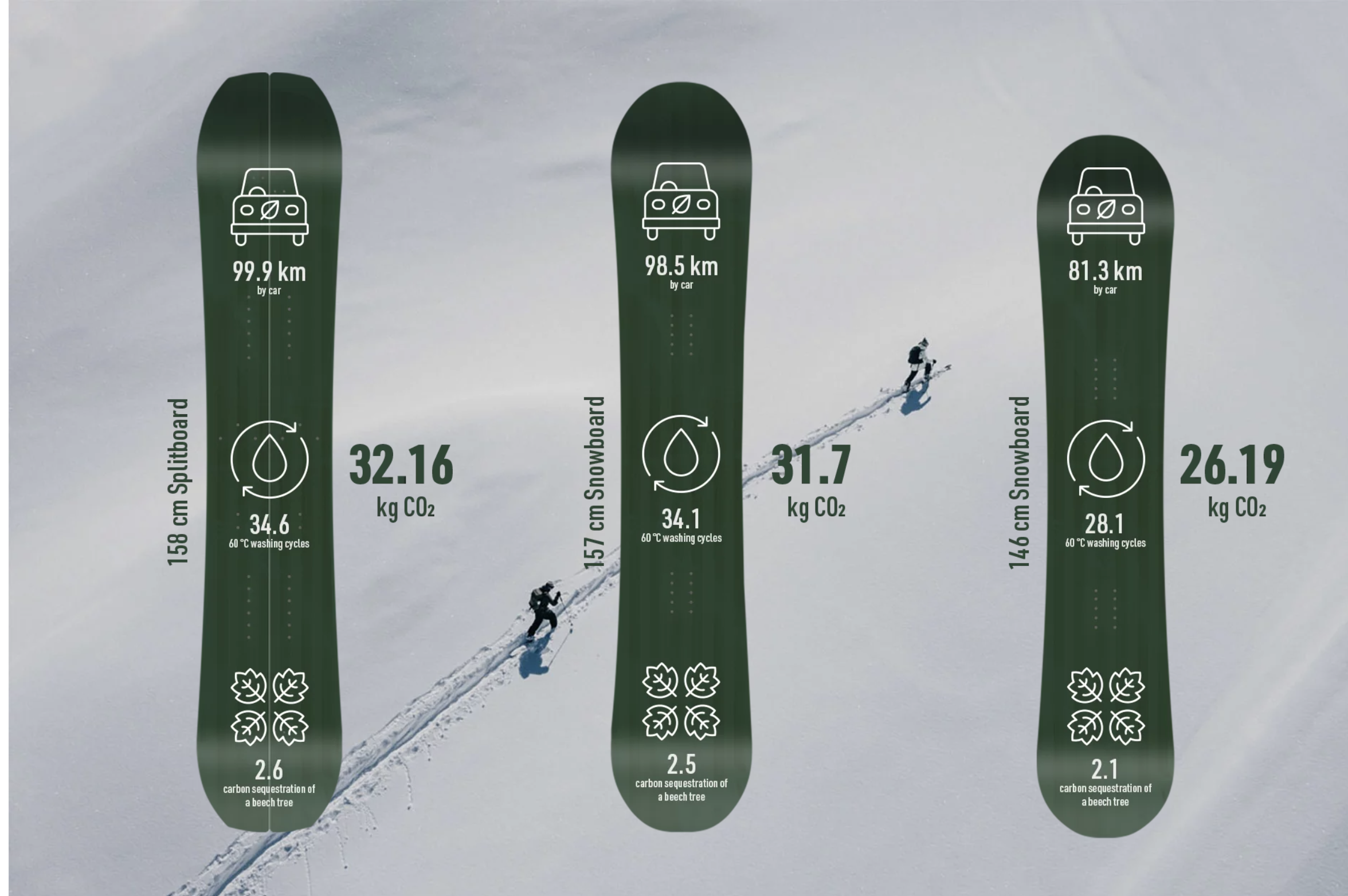
Carbon emissions per product unit compared to everyday activities.
HOW WE BUILD BETTER BINDINGS
Our binding production focuses on reducing waste, extending product life, and improving material efficiency, without sacrificing the trusted feel Nitro bindings are known for.
Current initiatives include:
• Manufactured using 100% solar-powered production
• Nearly zero-waste plastic injection molding process
• 20% recycled material in plastic components
• Plastic-free packaging
• Recycled cardboard packaging with significantly reduced ink usage
• Spare parts availability to extend product lifespan
The longest-lasting binding is the one that doesn't need to be replaced.
CLIMATE IMPACT REDUCTION INITIATIVES


HOW WE BUILD BETTER BOOTS
Our boot production focuses on building a fit and shell that lasts for as long as possible. The most eco-friendly boot is the one that you use the longest.
• Mostly PVC-free materials
• Recycled rubber in outsoles where technically possible
• Benzene-free glues
• Plastic-free packaging
• Durability and repairability focus
CLIMATE IMPACT REDUCTION INITATIVES

SOCIAL RESPONSIBILITY
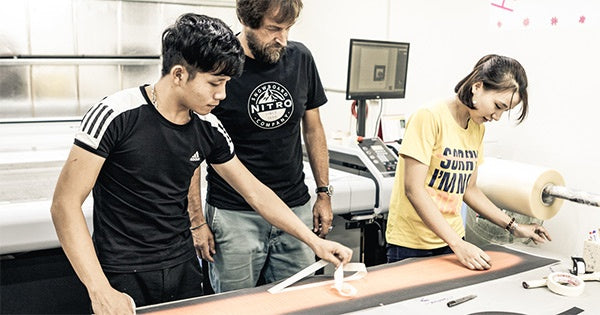
We believe sustainability is not only about materials and emissions. It is also about people. We work with long-term manufacturing partners and expect safe working conditions, fair compensation, and respectful treatment throughout our supply chain.
Rather than constantly moving production in search of the lowest cost and margin, we believe strong long-term partnerships create better products and better working environments. Sustainability starts with responsibility — for the people making our products, the retailers selling them, and the riders using them.
"Less talk. Less overproduction. Better products. Continuous improvement."
Partners